Better Cardiovascular Health, Measured by Life’s Simple 7, is Associated with Lower White Matter Hyperintensity Burden and Greater Cerebral Blood Flow Over Time
Abstract
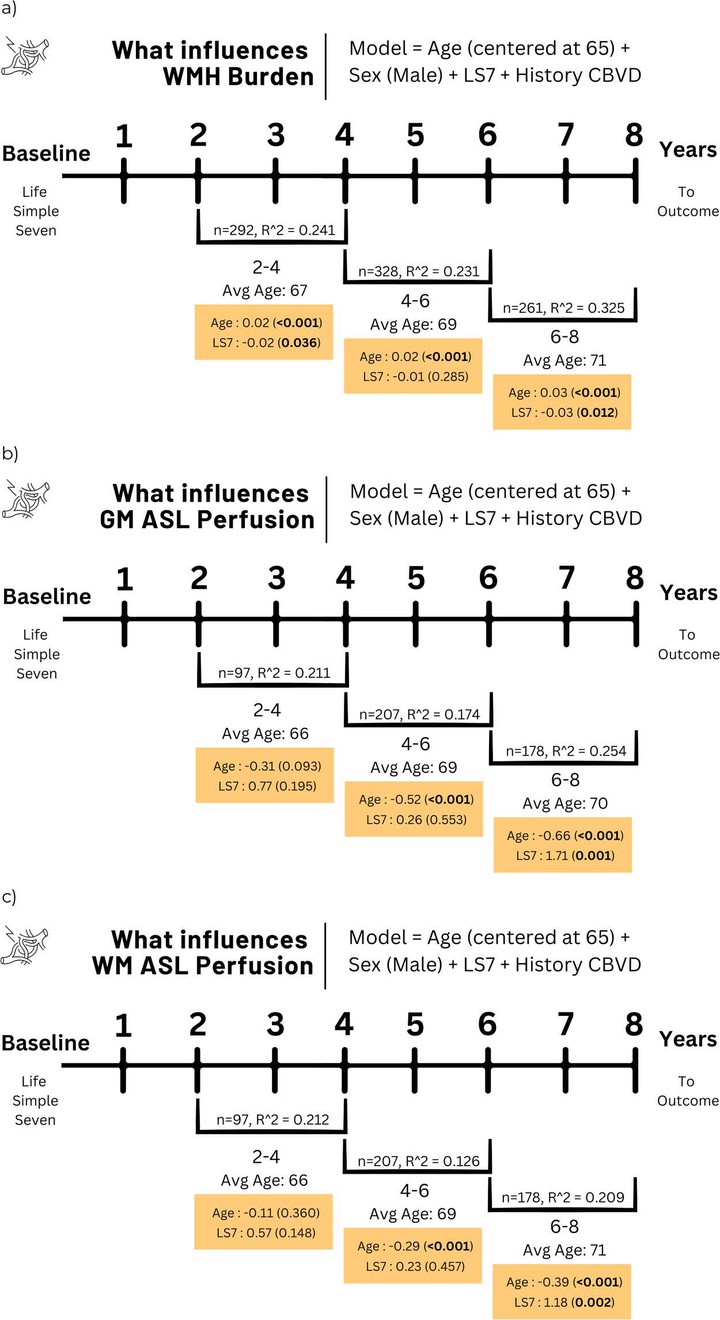
Background Lifestyle factors have been studied for dementia risk, but few have comprehensively assessed both Alzheimer’s disease (AD) and cerebrovascular disease (CBVD) pathologies. Objective Our research aims to determine the relationships between lifestyle and various dementia pathologies, challenging conventional research paradigms. Methods Analyzing 1231 Wisconsin Registry for Alzheimer’s Prevention (WRAP) study participants, we focused on Life Simple Seven (LS7) score calculations from questionnaire data and clinical vitals. We assessed brain health indicators including CBVD, AD, and cognition. Results Higher (healthier) LS7 scores were associated with better CBVD outcomes, including lower percent white matter hyperintensities and higher cerebral blood flow, and higher Preclinical Alzheimer’s Composite 3 and Delayed Recall scores. No significant associations were observed between LS7 scores and AD markers of amyloid and tau accumulation. Conclusion This study provides evidence that the beneficial effects of LS7 on cognition are primarily through cerebrovascular pathways rather than direct influences on AD pathology.